12 High-Performing Meta Ad Creatives for Tattoo Studios and Artists
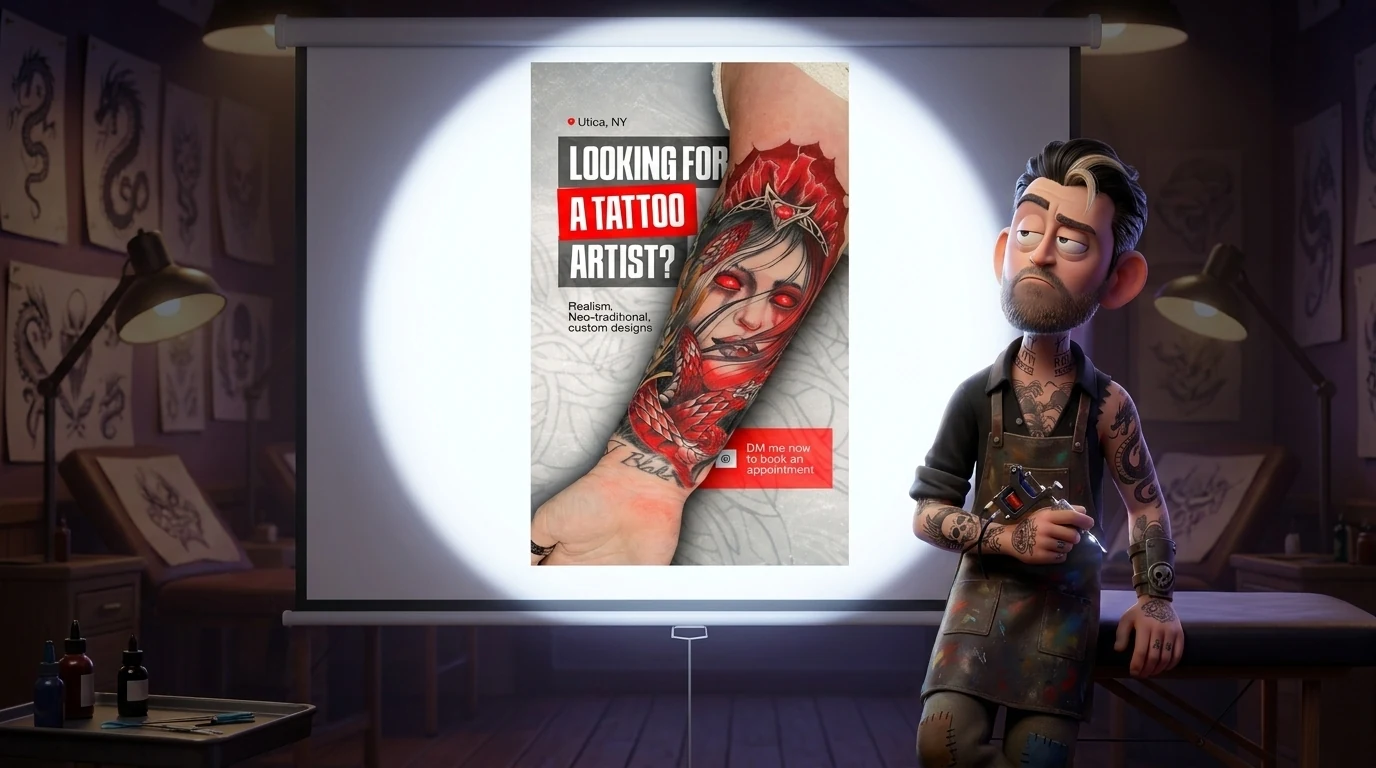
Every day I see a huge number of ads from tattoo artists and studios — and 70% of them will stop running ads within the next month. Why? Because they don't see results. And it's almost always the creative.
Yes, budget matters. Yes, technical setup matters. Yes, the audience matters. But nothing has more impact than the creative. Get it right and your campaign is already better than 90% of your competitors.
Below I've put together 12 creative examples from campaigns we've run - 8 videos and 4 statics. Enjoy.
Video creatives - tattoo studios
01. Fine Line Reel
What's shown: Sequential cuts of fine line pieces - one after another, consistent style throughout. No voiceover. Just the work.
Hook: New York City - a main street, traffic, the city moving. Then the tattoo work cuts in.
CTR: 3.1%
Why it works: Style clarity helps the right client self-select immediately. Someone looking for a fine line artist in their city sees the first frame and stops - because they already know this is their person.
02. Color & Black Grey Range
What's shown: Sequential cuts alternating between colorful pieces and black & grey work — different styles, consistent quality throughout.
Hook: City shot with a large flag - then tattoo photos fly in one after another.
CTR: 2.8%
Why it works: Shows the studios handles different preferences without feeling scattered. Someone thinking "I want color" and someone thinking "I want black & grey" both see themselves in the same ad.
03. Team at Work + Full Range
What's shown: Two artists tattooing side by side, then cuts through their work - color, black & grey, large pieces, small pieces. The full studio offer in one video.
Hook: Two artists tattooing at the same time, same frame.
CTR: 2.4%
Why it works: Shows depth. Multiple artists, multiple styles, different project sizes. Speaks to clients who want to book a shop. A working team also looks established, which builds trust with people who've never visited.
04. Walk-Through + Process + Portfolio
What's shown: Studio space first, then an artist at work, then cuts of finished pieces. The full picture in one ad.
Hook: The studio entrance in the first second - space and atmosphere before anything else.
CTR: 3.6%
Why it works: Answers three questions in one ad: what does the studio look like, how do they work, what do they make. The most complete trust-building format — runs cold audiences through the full intro before asking for anything.
Video creatives - tattoo artists
05. Guest Spot - Artist First
What's shown: The artist appears first - her face, her look, her identity. Text overlays introduce the guest spot: city, dates, availability. Then the video cuts to her work.
Hook: The artist herself in the first few seconds, before a single tattoo appears on screen.
CTR: 2.6%
Why it works: Leading with the person before the portfolio builds immediate connection. The viewer sees who they'd be booking, not just what they'd be getting. Scarcity ("spots almost gone") and a hard deadline (specific dates) push people who are already interested to act now instead of saving it for later.
06. AI Visualization - "How do you see my tattoos?"
What's shown: Opens on a ChatGPT-style interface with the prompt "How do you see my tattoos?" being typed in. Then cuts to the actual tattoo work - black & grey realism pieces. Then AI-generated images show what those same subjects would look like as real characters.
Hook: The ChatGPT interface in the first frame - unexpected enough to stop the scroll before a single tattoo appears.
CTR: 3.1%
Why it works: The format is novel - nobody expects an AI chat interface in a tattoo ad. The "wait, what?" moment keeps people watching. The juxtaposition of the tattoo and the AI render shows the concept behind the work, not just the ink - which is exactly what realism and portrait clients are buying.
07. Style Declaration - Anime Tattoo in [City]
What's shown: Opens with the city skyline and bold text: "ANIME TATTOO IN LOS ANGELES." Cuts to clips of recognizable anime characters, then shows those same characters tattooed in anime style on skin.
Hook: City skyline + three words that tell the right person exactly who this is for.
CTR: 2.9%
Why it works: This creative self-selects aggressively. An anime fan in LA sees "anime tattoo in Los Angeles" and they're already in - before a single tattoo appears. The anime clips create instant recognition, then the actual work lands with full context. No explanation needed.
08. "A Unique Tattoo Style Found Only in [City]"
What's shown: Opens with a split-screen of three tattoos at once - text overlay: "A UNIQUE TATTOO STYLE found only in Montreal." Then cuts to individual pieces shown in full scale one by one.
Hook: Tattoos scrolling downward one after another - different pieces keep appearing as the frame moves, with the bold claim overlaid on top.
CTR: 2.1%
Why it works: The exclusivity claim is a pattern interrupt - it's a statement, not just a portfolio. People in Montreal who've been scrolling past artist after artist stop because this feels specific to their city. The split-screen opening packs more visual information into the first second than a single tattoo could, and the claim creates enough curiosity to keep them watching.
Static creatives - tattoo artists
09. "Do You Have a Favorite Character?"
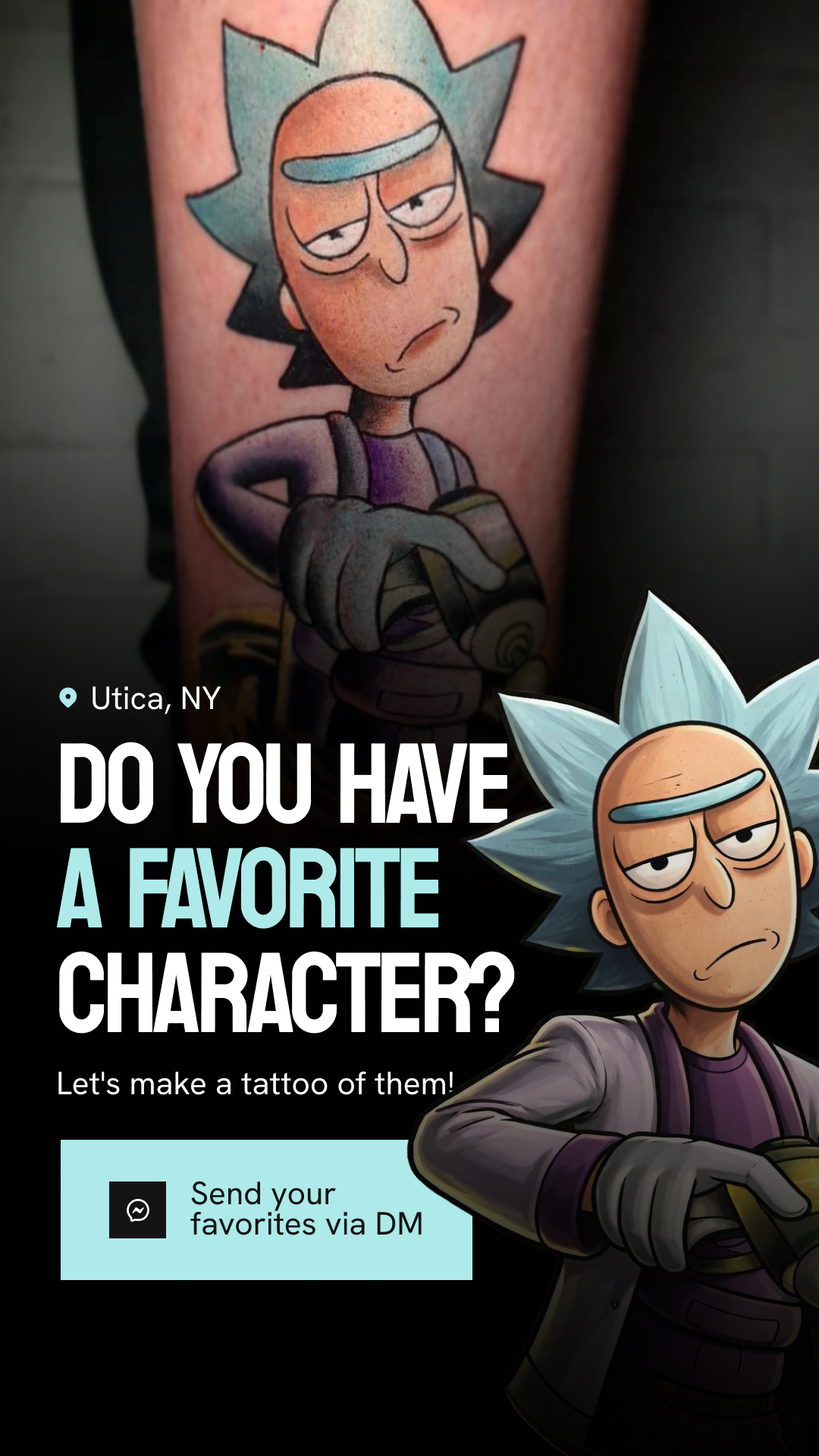
What's shown: Character tattoo on skin in the background, the original cartoon character overlaid in the corner. Text: "DO YOU HAVE A FAVORITE CHARACTER? Let's make a tattoo of them." CTA: "Send your favorites via DM."
Hook: The tattoo photo + the original character side by side.
CTR: 2.5%
Why it works: The question makes it personal - the viewer thinks of their own answer before they even decide to click. The tattoo + original pairing shows the process in one frame.
10. "Looking for a Tattoo Artist?"
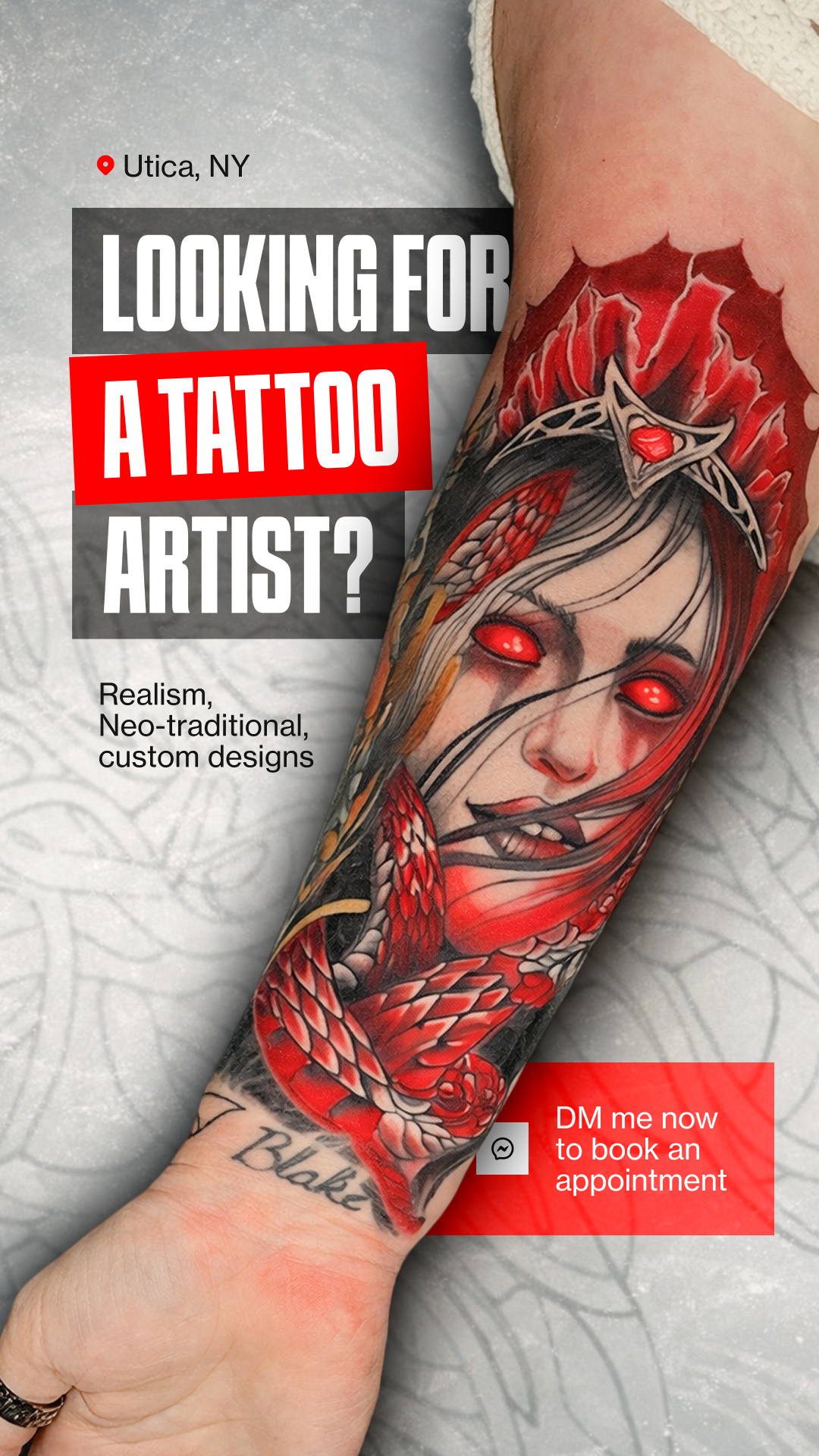
What's shown: A striking sleeve tattoo fills the frame. Text overlay: "LOOKING FOR A TATTOO ARTIST?" with styles listed below - Realism, Neo-traditional, custom designs. CTA: "DM me now to book an appointment."
Hook: The question + the tattoo together - if you're looking, you stop.
CTR: 2.4%
Why it works: Catches people at exactly the right moment — when they're actively looking. Listing styles filters for the right client before they even tap through.
11. Artist Authority - No Portfolio Needed
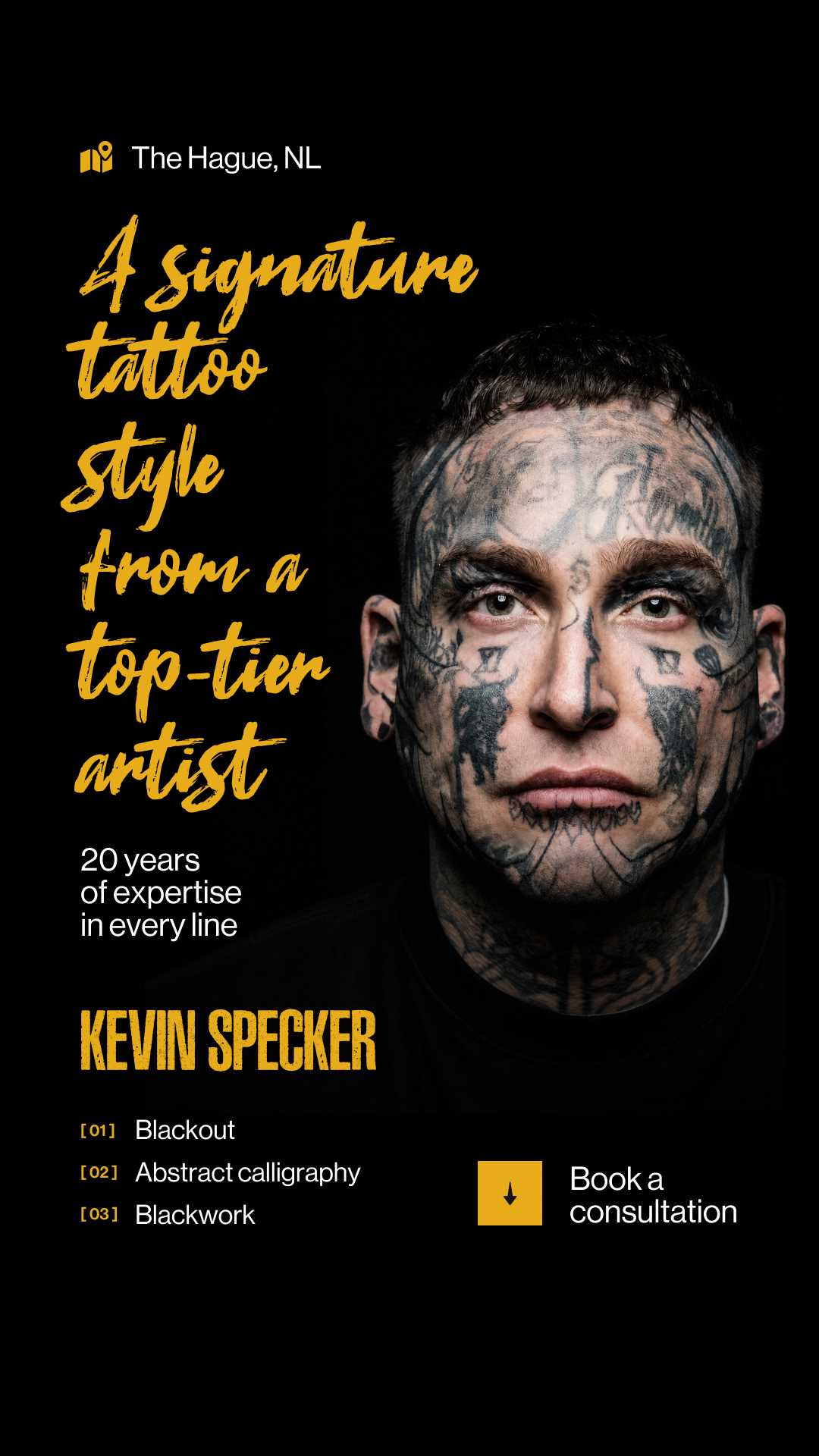
What's shown: The artist's face fills the frame - heavily tattooed, dark background. Text: "A signature tattoo style from a top-tier artist. 20 years of expertise in every line." Artist name. Styles listed: Blackout, Abstract calligraphy, Blackwork. CTA: "Book a consultation."
Hook: The heavily tattooed face - before any text registers, it signals this is someone serious.
CTR: 2.5%
Why it works: When the style is too niche to sell visually, you sell the artist's authority instead. The named styles attract the small percentage of people who already know they want this kind of work - and filter out everyone else.
12. Convention Canvas Search
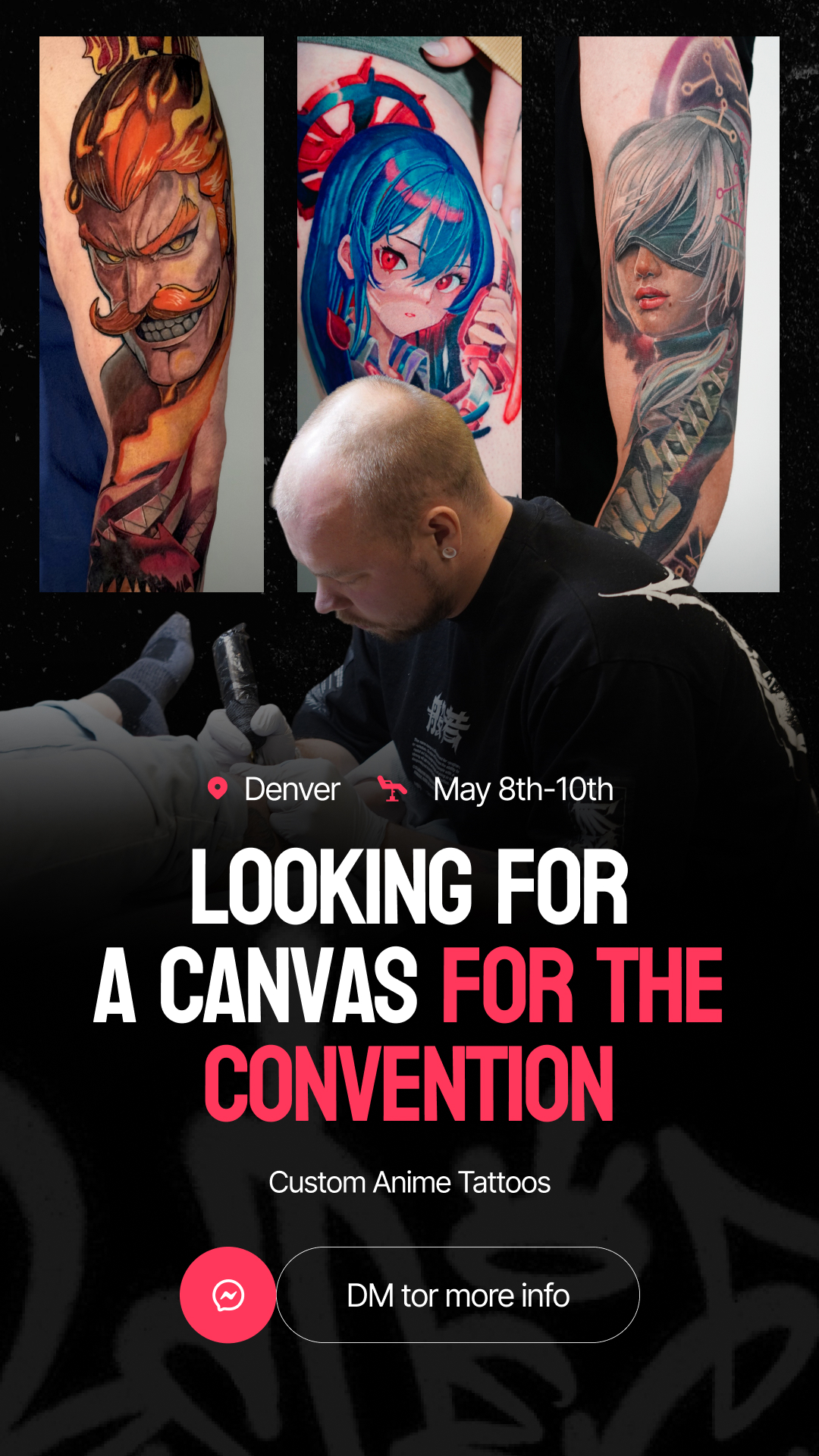
What's shown: Three portfolio pieces across the top, artist at work below. Location + dates. Text: "LOOKING FOR A CANVAS FOR THE CONVENTION - Custom Anime Tattoos." CTA: "DM for more info."
Hook: Three strong pieces in a row at the top - the work sells itself before the text lands.
CTR: 3.0%
Why it works: Convention ads need to communicate fast - who, where, when, what style. This does all four in one frame. "Looking for a canvas" flips the dynamic: the artist is choosing, not just selling.
What to test first
There's no universal answer - what works for a realism artist in LA won't work the same way for a fine line artist in New York. Start with whatever you already have footage for, or whatever takes the least effort to put together. One ad live beats ten ideas sitting in a folder. Run it, see what the numbers say, then adjust from there.
If this feels like too much to figure out while you're working with clients or running a shop - we handle it. Here's how Meta Ads work with us.
12 High-Performing Meta Ad Creatives for Tattoo Studios and Artists
Every day I see a huge number of ads from tattoo artists and studios — and 70% of them will stop running ads within the next month. Why? Because they don't see results. And it's almost always the creative.
Yes, budget matters. Yes, technical setup matters. Yes, the audience matters. But nothing has more impact than the creative. Get it right and your campaign is already better than 90% of your competitors.
Below I've put together 12 creative examples from campaigns we've run - 8 videos and 4 statics. Enjoy.
Video creatives - tattoo studios
01. Fine Line Reel
What's shown: Sequential cuts of fine line pieces - one after another, consistent style throughout. No voiceover. Just the work.
Hook: New York City - a main street, traffic, the city moving. Then the tattoo work cuts in.
CTR: 3.1%
Why it works: Style clarity helps the right client self-select immediately. Someone looking for a fine line artist in their city sees the first frame and stops - because they already know this is their person.
02. Color & Black Grey Range
What's shown: Sequential cuts alternating between colorful pieces and black & grey work — different styles, consistent quality throughout.
Hook: City shot with a large flag - then tattoo photos fly in one after another.
CTR: 2.8%
Why it works: Shows the studios handles different preferences without feeling scattered. Someone thinking "I want color" and someone thinking "I want black & grey" both see themselves in the same ad.
03. Team at Work + Full Range
What's shown: Two artists tattooing side by side, then cuts through their work - color, black & grey, large pieces, small pieces. The full studio offer in one video.
Hook: Two artists tattooing at the same time, same frame.
CTR: 2.4%
Why it works: Shows depth. Multiple artists, multiple styles, different project sizes. Speaks to clients who want to book a shop. A working team also looks established, which builds trust with people who've never visited.
04. Walk-Through + Process + Portfolio
What's shown: Studio space first, then an artist at work, then cuts of finished pieces. The full picture in one ad.
Hook: The studio entrance in the first second - space and atmosphere before anything else.
CTR: 3.6%
Why it works: Answers three questions in one ad: what does the studio look like, how do they work, what do they make. The most complete trust-building format — runs cold audiences through the full intro before asking for anything.
Video creatives - tattoo artists
05. Guest Spot - Artist First
What's shown: The artist appears first - her face, her look, her identity. Text overlays introduce the guest spot: city, dates, availability. Then the video cuts to her work.
Hook: The artist herself in the first few seconds, before a single tattoo appears on screen.
CTR: 2.6%
Why it works: Leading with the person before the portfolio builds immediate connection. The viewer sees who they'd be booking, not just what they'd be getting. Scarcity ("spots almost gone") and a hard deadline (specific dates) push people who are already interested to act now instead of saving it for later.
06. AI Visualization - "How do you see my tattoos?"
What's shown: Opens on a ChatGPT-style interface with the prompt "How do you see my tattoos?" being typed in. Then cuts to the actual tattoo work - black & grey realism pieces. Then AI-generated images show what those same subjects would look like as real characters.
Hook: The ChatGPT interface in the first frame - unexpected enough to stop the scroll before a single tattoo appears.
CTR: 3.1%
Why it works: The format is novel - nobody expects an AI chat interface in a tattoo ad. The "wait, what?" moment keeps people watching. The juxtaposition of the tattoo and the AI render shows the concept behind the work, not just the ink - which is exactly what realism and portrait clients are buying.
07. Style Declaration - Anime Tattoo in [City]
What's shown: Opens with the city skyline and bold text: "ANIME TATTOO IN LOS ANGELES." Cuts to clips of recognizable anime characters, then shows those same characters tattooed in anime style on skin.
Hook: City skyline + three words that tell the right person exactly who this is for.
CTR: 2.9%
Why it works: This creative self-selects aggressively. An anime fan in LA sees "anime tattoo in Los Angeles" and they're already in - before a single tattoo appears. The anime clips create instant recognition, then the actual work lands with full context. No explanation needed.
08. "A Unique Tattoo Style Found Only in [City]"
What's shown: Opens with a split-screen of three tattoos at once - text overlay: "A UNIQUE TATTOO STYLE found only in Montreal." Then cuts to individual pieces shown in full scale one by one.
Hook: Tattoos scrolling downward one after another - different pieces keep appearing as the frame moves, with the bold claim overlaid on top.
CTR: 2.1%
Why it works: The exclusivity claim is a pattern interrupt - it's a statement, not just a portfolio. People in Montreal who've been scrolling past artist after artist stop because this feels specific to their city. The split-screen opening packs more visual information into the first second than a single tattoo could, and the claim creates enough curiosity to keep them watching.
Static creatives - tattoo artists
09. "Do You Have a Favorite Character?"
What's shown: Character tattoo on skin in the background, the original cartoon character overlaid in the corner. Text: "DO YOU HAVE A FAVORITE CHARACTER? Let's make a tattoo of them." CTA: "Send your favorites via DM."
Hook: The tattoo photo + the original character side by side.
CTR: 2.5%
Why it works: The question makes it personal - the viewer thinks of their own answer before they even decide to click. The tattoo + original pairing shows the process in one frame.
10. "Looking for a Tattoo Artist?"
What's shown: A striking sleeve tattoo fills the frame. Text overlay: "LOOKING FOR A TATTOO ARTIST?" with styles listed below - Realism, Neo-traditional, custom designs. CTA: "DM me now to book an appointment."
Hook: The question + the tattoo together - if you're looking, you stop.
CTR: 2.4%
Why it works: Catches people at exactly the right moment — when they're actively looking. Listing styles filters for the right client before they even tap through.
11. Artist Authority - No Portfolio Needed
What's shown: The artist's face fills the frame - heavily tattooed, dark background. Text: "A signature tattoo style from a top-tier artist. 20 years of expertise in every line." Artist name. Styles listed: Blackout, Abstract calligraphy, Blackwork. CTA: "Book a consultation."
Hook: The heavily tattooed face - before any text registers, it signals this is someone serious.
CTR: 2.5%
Why it works: When the style is too niche to sell visually, you sell the artist's authority instead. The named styles attract the small percentage of people who already know they want this kind of work - and filter out everyone else.
12. Convention Canvas Search
What's shown: Three portfolio pieces across the top, artist at work below. Location + dates. Text: "LOOKING FOR A CANVAS FOR THE CONVENTION - Custom Anime Tattoos." CTA: "DM for more info."
Hook: Three strong pieces in a row at the top - the work sells itself before the text lands.
CTR: 3.0%
Why it works: Convention ads need to communicate fast - who, where, when, what style. This does all four in one frame. "Looking for a canvas" flips the dynamic: the artist is choosing, not just selling.
What to test first
There's no universal answer - what works for a realism artist in LA won't work the same way for a fine line artist in New York. Start with whatever you already have footage for, or whatever takes the least effort to put together. One ad live beats ten ideas sitting in a folder. Run it, see what the numbers say, then adjust from there.
If this feels like too much to figure out while you're working with clients or running a shop - we handle it. Here's how Meta Ads work with us.
12 High-Performing Meta Ad Creatives for Tattoo Studios and Artists
Every day I see a huge number of ads from tattoo artists and studios — and 70% of them will stop running ads within the next month. Why? Because they don't see results. And it's almost always the creative.
Yes, budget matters. Yes, technical setup matters. Yes, the audience matters. But nothing has more impact than the creative. Get it right and your campaign is already better than 90% of your competitors.
Below I've put together 12 creative examples from campaigns we've run - 8 videos and 4 statics. Enjoy.
Video creatives - tattoo studios
01. Fine Line Reel
What's shown: Sequential cuts of fine line pieces - one after another, consistent style throughout. No voiceover. Just the work.
Hook: New York City - a main street, traffic, the city moving. Then the tattoo work cuts in.
CTR: 3.1%
Why it works: Style clarity helps the right client self-select immediately. Someone looking for a fine line artist in their city sees the first frame and stops - because they already know this is their person.
02. Color & Black Grey Range
What's shown: Sequential cuts alternating between colorful pieces and black & grey work — different styles, consistent quality throughout.
Hook: City shot with a large flag - then tattoo photos fly in one after another.
CTR: 2.8%
Why it works: Shows the studios handles different preferences without feeling scattered. Someone thinking "I want color" and someone thinking "I want black & grey" both see themselves in the same ad.
03. Team at Work + Full Range
What's shown: Two artists tattooing side by side, then cuts through their work - color, black & grey, large pieces, small pieces. The full studio offer in one video.
Hook: Two artists tattooing at the same time, same frame.
CTR: 2.4%
Why it works: Shows depth. Multiple artists, multiple styles, different project sizes. Speaks to clients who want to book a shop. A working team also looks established, which builds trust with people who've never visited.
04. Walk-Through + Process + Portfolio
What's shown: Studio space first, then an artist at work, then cuts of finished pieces. The full picture in one ad.
Hook: The studio entrance in the first second - space and atmosphere before anything else.
CTR: 3.6%
Why it works: Answers three questions in one ad: what does the studio look like, how do they work, what do they make. The most complete trust-building format — runs cold audiences through the full intro before asking for anything.
Video creatives - tattoo artists
05. Guest Spot - Artist First
What's shown: The artist appears first - her face, her look, her identity. Text overlays introduce the guest spot: city, dates, availability. Then the video cuts to her work.
Hook: The artist herself in the first few seconds, before a single tattoo appears on screen.
CTR: 2.6%
Why it works: Leading with the person before the portfolio builds immediate connection. The viewer sees who they'd be booking, not just what they'd be getting. Scarcity ("spots almost gone") and a hard deadline (specific dates) push people who are already interested to act now instead of saving it for later.
06. AI Visualization - "How do you see my tattoos?"
What's shown: Opens on a ChatGPT-style interface with the prompt "How do you see my tattoos?" being typed in. Then cuts to the actual tattoo work - black & grey realism pieces. Then AI-generated images show what those same subjects would look like as real characters.
Hook: The ChatGPT interface in the first frame - unexpected enough to stop the scroll before a single tattoo appears.
CTR: 3.1%
Why it works: The format is novel - nobody expects an AI chat interface in a tattoo ad. The "wait, what?" moment keeps people watching. The juxtaposition of the tattoo and the AI render shows the concept behind the work, not just the ink - which is exactly what realism and portrait clients are buying.
07. Style Declaration - Anime Tattoo in [City]
What's shown: Opens with the city skyline and bold text: "ANIME TATTOO IN LOS ANGELES." Cuts to clips of recognizable anime characters, then shows those same characters tattooed in anime style on skin.
Hook: City skyline + three words that tell the right person exactly who this is for.
CTR: 2.9%
Why it works: This creative self-selects aggressively. An anime fan in LA sees "anime tattoo in Los Angeles" and they're already in - before a single tattoo appears. The anime clips create instant recognition, then the actual work lands with full context. No explanation needed.
08. "A Unique Tattoo Style Found Only in [City]"
What's shown: Opens with a split-screen of three tattoos at once - text overlay: "A UNIQUE TATTOO STYLE found only in Montreal." Then cuts to individual pieces shown in full scale one by one.
Hook: Tattoos scrolling downward one after another - different pieces keep appearing as the frame moves, with the bold claim overlaid on top.
CTR: 2.1%
Why it works: The exclusivity claim is a pattern interrupt - it's a statement, not just a portfolio. People in Montreal who've been scrolling past artist after artist stop because this feels specific to their city. The split-screen opening packs more visual information into the first second than a single tattoo could, and the claim creates enough curiosity to keep them watching.
Static creatives - tattoo artists
09. "Do You Have a Favorite Character?"
What's shown: Character tattoo on skin in the background, the original cartoon character overlaid in the corner. Text: "DO YOU HAVE A FAVORITE CHARACTER? Let's make a tattoo of them." CTA: "Send your favorites via DM."
Hook: The tattoo photo + the original character side by side.
CTR: 2.5%
Why it works: The question makes it personal - the viewer thinks of their own answer before they even decide to click. The tattoo + original pairing shows the process in one frame.
10. "Looking for a Tattoo Artist?"
What's shown: A striking sleeve tattoo fills the frame. Text overlay: "LOOKING FOR A TATTOO ARTIST?" with styles listed below - Realism, Neo-traditional, custom designs. CTA: "DM me now to book an appointment."
Hook: The question + the tattoo together - if you're looking, you stop.
CTR: 2.4%
Why it works: Catches people at exactly the right moment — when they're actively looking. Listing styles filters for the right client before they even tap through.
11. Artist Authority - No Portfolio Needed
What's shown: The artist's face fills the frame - heavily tattooed, dark background. Text: "A signature tattoo style from a top-tier artist. 20 years of expertise in every line." Artist name. Styles listed: Blackout, Abstract calligraphy, Blackwork. CTA: "Book a consultation."
Hook: The heavily tattooed face - before any text registers, it signals this is someone serious.
CTR: 2.5%
Why it works: When the style is too niche to sell visually, you sell the artist's authority instead. The named styles attract the small percentage of people who already know they want this kind of work - and filter out everyone else.
12. Convention Canvas Search
What's shown: Three portfolio pieces across the top, artist at work below. Location + dates. Text: "LOOKING FOR A CANVAS FOR THE CONVENTION - Custom Anime Tattoos." CTA: "DM for more info."
Hook: Three strong pieces in a row at the top - the work sells itself before the text lands.
CTR: 3.0%
Why it works: Convention ads need to communicate fast - who, where, when, what style. This does all four in one frame. "Looking for a canvas" flips the dynamic: the artist is choosing, not just selling.
What to test first
There's no universal answer - what works for a realism artist in LA won't work the same way for a fine line artist in New York. Start with whatever you already have footage for, or whatever takes the least effort to put together. One ad live beats ten ideas sitting in a folder. Run it, see what the numbers say, then adjust from there.
If this feels like too much to figure out while you're working with clients or running a shop - we handle it. Here's how Meta Ads work with us.
Keep reading
All stories →
No time to read right now?
Drop your email and we'll send the best growth playbooks, case breakdowns and booking tactics straight to your inbox. One sharp email, twice a month — no spam, unsubscribe anytime.
No time to read right now?
Drop your email and we'll send the best growth playbooks, case breakdowns and booking tactics straight to your inbox. One sharp email, twice a month — no spam, unsubscribe anytime.
No time to read right now?
Drop your email and we'll send the best growth playbooks, case breakdowns and booking tactics straight to your inbox. One sharp email, twice a month — no spam, unsubscribe anytime.